The Three Questions That Saved My Bench
Why the most profitable word in watchmaking is "no"
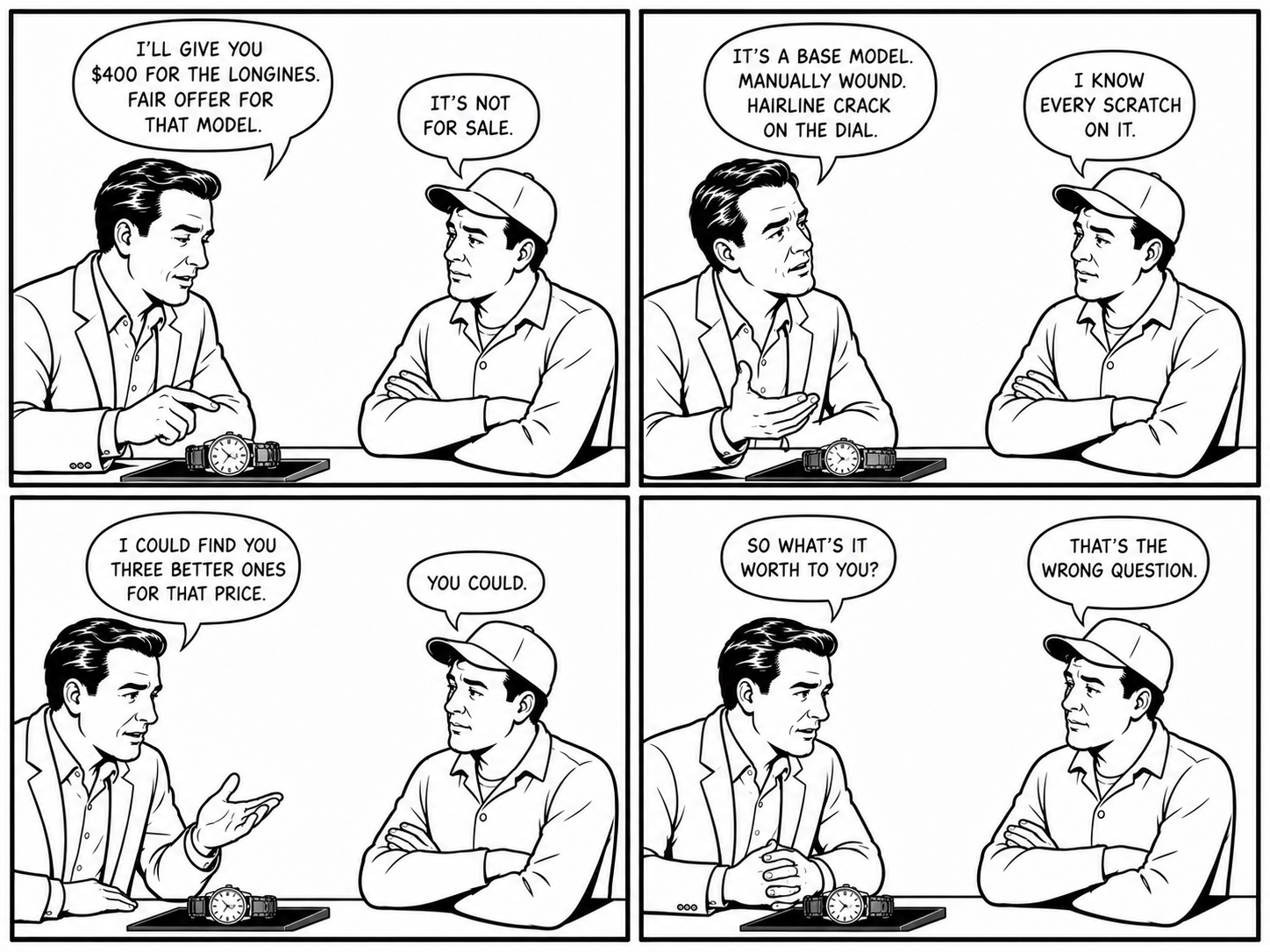
Last month I turned down a $400 job. Best decision I made that week.
Here's what happened.
A client brought in a vintage chronograph. Familiar brand, fair price for the work, and the client himself was easy to talk to. Everything about it looked like a clean yes.
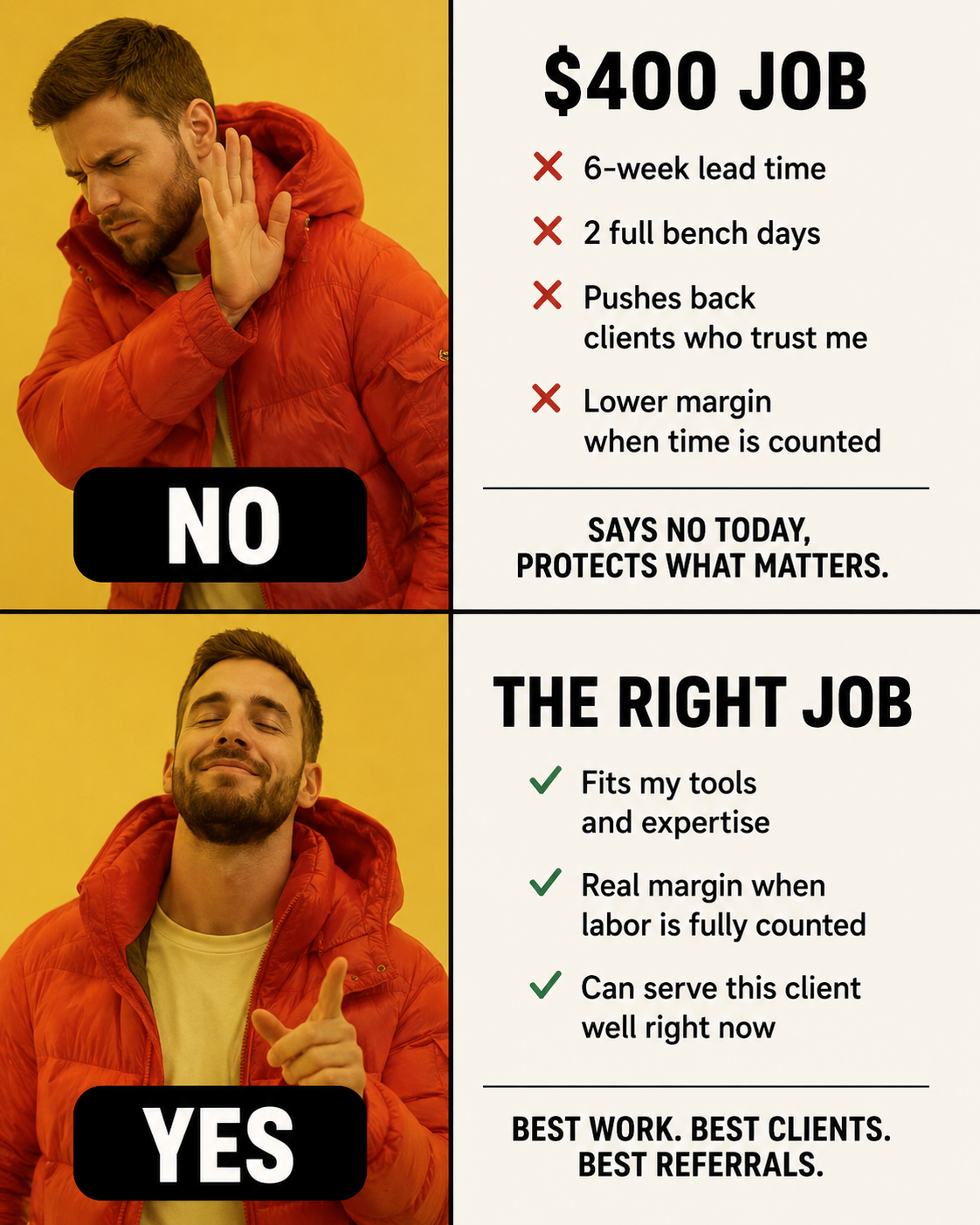
Then I looked closer. The complication needed a part with a six-week lead time. The service itself would lock up two full bench days once parts arrived. And I already had two regular clients waiting on jobs I'd promised the week before.
If I'd said yes, I would have displaced two people who already trust me, for one new job that wasn't even profitable once I counted the time honestly.
I said no. He took it across town. My regulars got their watches back on schedule.
That was the week I realized something I'd been avoiding for years.
Yes feels safer. It almost never is.
Every independent watchmaker I know carries the same quiet fear. Turn down work, and the work stops coming. Say no to a job, and word gets out that you're "difficult." So we say yes to mismatched complications, yes to brands we don't know well, yes to clients whose expectations don't match our shop.
And the cost shows up later. In missed deadlines. In tired work. In regulars who slowly drift to someone who returned their calls faster.
The job you should have refused is the one that crowds out the work you're actually built to do.
The Job Filter
I run every incoming job through four questions now. If any one returns a no, I pause before accepting.
1. Does the complication match my tools and expertise?
Not "could I figure it out." Not "I've seen this done." Does my shop have the parts pipeline, the tooling, and the muscle memory to do this work to my own standard. Stretching outside that zone costs time I can't bill for, and the result rarely matches my best work.
2. What's the real margin once labor is fully counted?
Quoted price minus parts is not margin. Real margin is what's left after I count every hour the job actually consumes: diagnosis, parts sourcing, service, regulation, testing, callbacks. When I do that math honestly, some "good" jobs pay less than minimum wage.
3. What's the parts lead time, and does the client understand it?
A 6-week part on a watch the client expects back in two weeks is a complaint waiting to happen. Even if I do the work perfectly. Clarity at intake protects the relationship later.
4. Can I serve this client well right now?
Not in theory. Right now. With the bench load I already have, the clients already waiting, and the energy I have left at the end of the day. Saying yes when I'm already full doesn't help the new client. It hurts them and everyone behind them.
The mindset shift
Here's the part that took me longest to internalize.
Your best referrals don't come from saying yes to everyone. They come from doing exceptional work for the clients who already trust you, and letting those clients tell their friends.
Volume doesn't build a reputation. Consistency does.
Every yes you give a mismatched job is a no you're quietly giving the clients waiting their turn. The math feels backwards until you've watched it play out a few times.
Rewiring the reflex
If saying no still feels guilty, try this. Don't say no to the person. Say no to the job, and refer them well.
"This isn't the right fit for my shop, but here's someone who specializes in this work."
That sentence protects your bench, helps the client, and builds goodwill with the watchmaker you sent them to. Nobody loses.
The shops I respect most aren't the ones that take everything. They're the ones that know exactly what they do well, and trust their reputation enough to point the rest elsewhere.
A simple test
Next time a job comes in that feels a little off, run it through the four questions before quoting. Write your answers down if you have to.
If any answer is no, say no.
The first few times will feel uncomfortable. After that, you'll start to notice something. Your bench moves smoother. Your regulars get their watches back on time. And the work you keep is the work that makes you better.
That's the trade. And it's the one most of us are afraid to make.
What's a job type you've started declining? Did it hurt or help your shop? Hit reply, I read every one.
—FZ