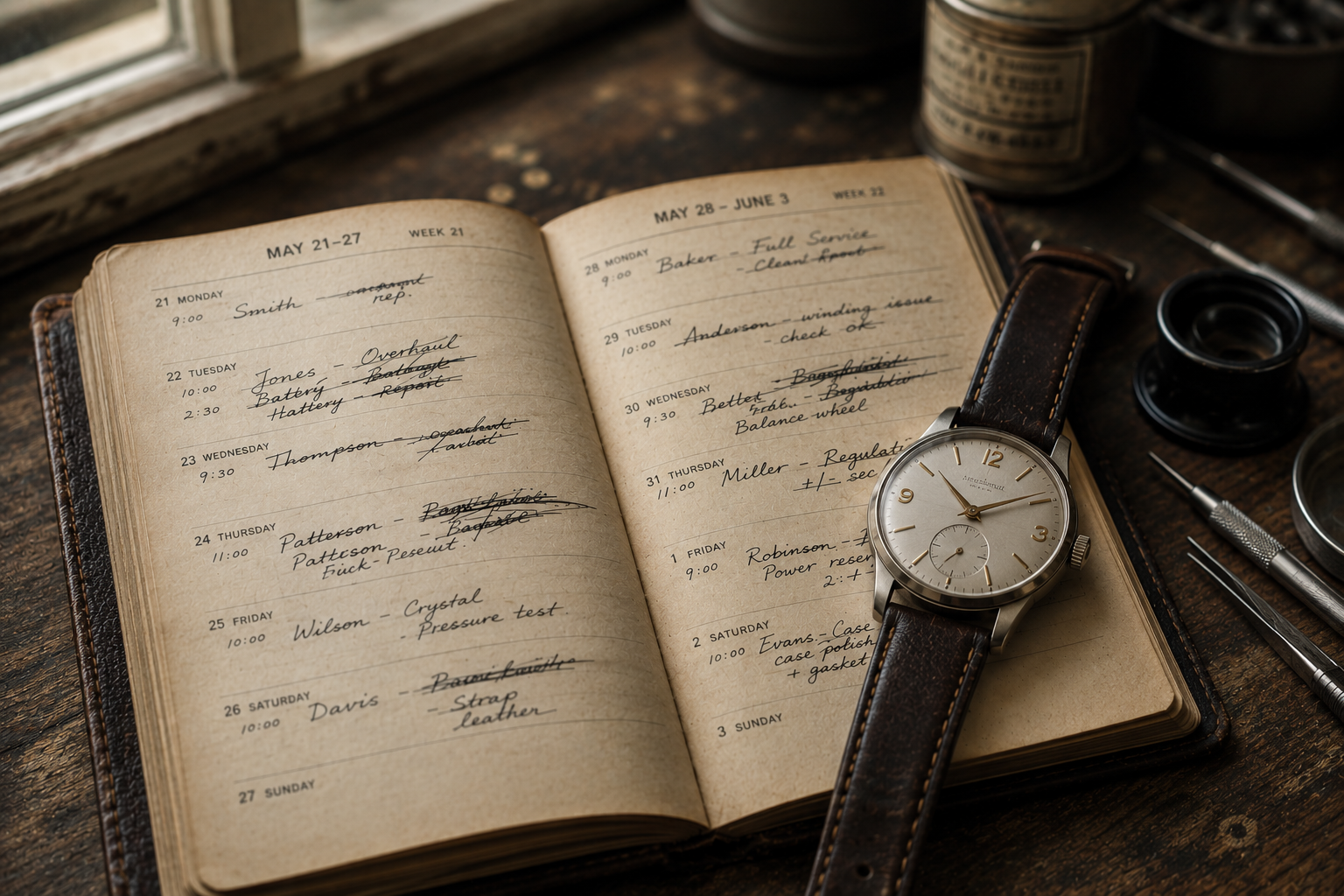
Never rush a watch. Here's why.

If you're choosing a watchmaker, here's one question that tells you almost everything. How long does the watch stay on the bench after the work is done?
Not during the service. After.
A watch that has just been serviced will almost always run. That's the easy part. The hard part is the quiet stretch that comes next, and most shops skip it. The watch sits. Gets worn. Gets checked again when it would be easier not to. Gets turned into positions it doesn't want to be in, because that's where the truth lives.
You cannot compress that stretch into an hour. You can only skip it.
Here's the principle I work by, and the one I'd want any watchmaker touching your piece to work by too:
The watch tells you when it's done. You don't tell the watch.
A rushed service hides its problems. A rate that looks fine on the bench but drifts once the watch is actually being worn. A screw that was snug at closing but works itself loose under the motion of a real wrist. Power reserve that falls short of where it should be. None of that shows up in an afternoon. All of it shows up in a week.
So when you hand a watch to someone, ask them what happens between "finished" and "returned to you." If the answer is nothing, you have your answer about the shop.
If the answer is patient, specific, a little boring, you've found someone worth trusting.
Has a craftsman ever taken longer with something than you expected, and the result was worth every day of the wait? I'd love to hear what it was.
-FZ